Christmas Holly Bow Embroidery
A Designer’s Real-World Review for Personalized Gift Makers
As an embroidery designer who’s shipped over 3,000 custom holiday orders—and tested hundreds of machine embroidery designs—I approached Christmas Holly Bow Embroidery with a very specific question: “Will this design help my small shop sell more meaningful, high-perceived-value personalized gifts?” Not just “does it stitch well,” but “does it resonate emotionally, translate beautifully across product types, and hold up under real-world production demands?” After testing it on six fabric categories and five product formats, here’s what I found.
First Impressions: Classic Charm with Quiet Confidence
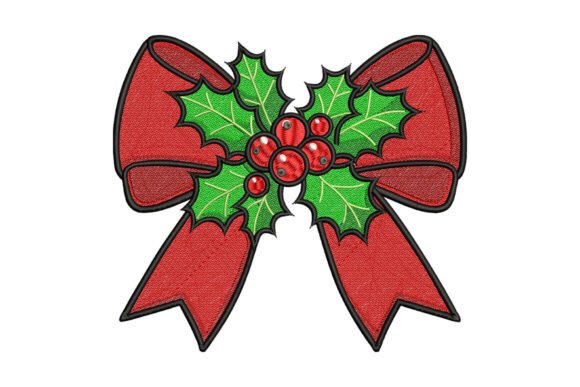
The Christmas Holly Bow Embroidery lands exactly where it should—timeless, joyful, and gently refined. It’s not overly fussy or cartoonish; instead, it feels like a hand-drawn sketch translated into thoughtful stitching. The red bow has soft curves and subtle shading, the holly leaves carry gentle vein detail, and the berries pop without looking plastic. It reads as elegant yet approachable, seasonal but not dated, and deeply handmade in spirit—even though it’s a digital embroidery file. Customers browsing for a baby blanket or wedding keepsake won’t scroll past. They’ll pause. That emotional hook matters—especially when you’re competing on Etsy or at a local craft fair.
Where This Design Truly Shines (and Why Your Customers Will Love It)
Christmas Holly Bow Embroidery is unusually versatile for a single seasonal motif. Here’s how it performs across your most-requested personalized gift categories:
- Baby embroidery: Stunning on organic cotton swaddle blankets and muslin nursery pillows. The balanced proportions avoid overwhelming delicate scale—no tiny stems or micro-berries that vanish on soft fabric.
- Wedding gift: Elegant on ivory linen pillow covers or monogrammed aprons for the couple’s first holiday together. Paired with a simple script monogram, it whispers tradition—not trend.
- Embroidered towel: Holds crisp definition on medium-weight terry, especially when stitched with quality 40-weight thread and cutaway stabilizer. Avoid ultra-plush towels unless you reduce stitch density slightly.
- Pillow cover & tote bag: Reads clearly at 4–5 inches wide—ideal for front-center placement. The bow’s symmetry makes it forgiving on curved seams or uneven fabric tension.
- Blanket embroidery: Works beautifully on quilted throws and fleece-backed baby blankets. Its moderate stitch density prevents stiffness while retaining rich texture.
- Etsy seller & small shop product: Photographs exceptionally well—even on phone cameras. The contrast between red, green, and white threads creates instant visual warmth, boosting click-through rates and perceived handmade quality.
Where to Use Christmas Holly Bow Embroidery Thoughtfully
This isn’t a “stitch-and-forget” design. Its charm depends on smart execution. Proceed with care on:
- Stretchy baby clothes: Avoid bodysuits or knit onesies unless you use tear-away + light cutaway stabilizer and reduce top tension. The bow’s curves can distort on highly elastic fabric.
- Textured or napped fabrics: Heavy terry, velvet, or bouclé may swallow fine leaf details. Test first—and consider simplifying the inner holly veins if needed.
- Dark fabric: The red bow remains legible, but bright red berries can fade visually. Boost berry contrast with a metallic or high-sheen red thread—or add a subtle white outline stitch if your embroidery software allows.
- Products needing frequent washing: Recommend customers turn items inside out before laundering. While the stitch density supports durability, repeated hot washes + dry cycles will soften berry definition over time—manage expectations in your product description.
- Curved surfaces (mugs, ornaments, curved tote straps): Not recommended. The design wasn’t digitized for distortion compensation. Stick to flat or gently contoured surfaces like pillow fronts or tote centers.
Why This Design Builds Trust—and Drives Repeat Orders
Customers don’t buy embroidery files—they buy confidence, connection, and care. When someone chooses a personalized gift embroidered with Christmas Holly Bow Embroidery, they’re choosing something that feels intentional, heirloom-adjacent, and quietly special. That perception lifts your entire brand. Buyers notice the clean edge finish on the bow loops, the consistent berry spacing, and the way the holly leaves “rest” naturally against the bow—not stacked or forced. It tells them, “This maker pays attention.” That trust translates directly into better reviews, fewer returns, and higher average order value—especially when bundled (e.g., “Holly Bow Towel + Matching Pillow Cover Set”).
Essential Embroidery Notes Before You Stitch
Before using Christmas Holly Bow Embroidery on customer orders, run these checks:
- Test on scrap fabric that matches your final product—same weight, weave, and pre-wash status.
- Verify thread color contrast on both light and dark fabric mockups. Red-on-black looks dramatic; red-on-cream reads softer and more vintage.
- Confirm hoop size compatibility with your machine and intended placement (e.g., 4x4 for towels, 5x7 for pillow covers).
- Review stitch density—if it feels heavy for your fabric, adjust underlay or reduce fill density by 5–10%.
- Use appropriate stabilizer: Cutaway for knits and towels, tear-away for stable wovens, and fusible + tear-away for lightweight linens.
- Check small details post-stitch: Run a fingernail lightly over berries—any skipped stitches or thread nests? Re-hoop and re-stitch if needed.
- Confirm commercial licensing before selling finished products. If the embroidery file includes usage terms, read them carefully—many designers allow small shop use but restrict mass production or resale of the digital file itself.
Bottom line: Christmas Holly Bow Embroidery isn’t just another holiday download. It’s a thoughtful, production-ready tool for makers who value emotional resonance as much as technical precision. When paired with the right fabric, stabilizer, and storytelling in your listings, it becomes more than decoration—it becomes a quiet promise of warmth, memory, and handmade care. And in today’s market? That’s the kind of personalized gift that gets wrapped twice—and remembered for years.