Fall Goose Embroidery Design, Autumn
A Charming, Seasonal Stitch with Real-World Versatility
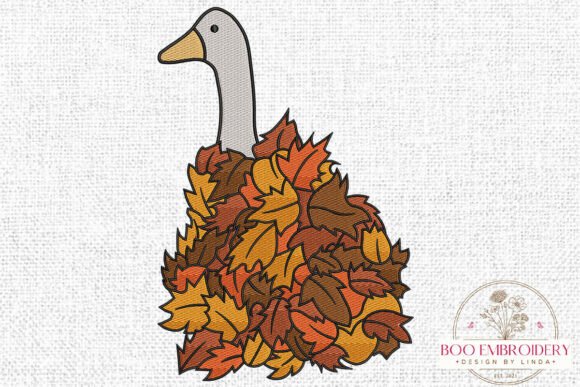
As an embroidery designer who’s stitched over 300 seasonal collections for Etsy sellers, boutique brands, and custom apparel clients, I approached the Fall Goose Embroidery Design, Autumn with cautious optimism. It’s easy to get drawn in by autumn-themed graphics—especially geese—but charm alone doesn’t translate to clean stitching or commercial reliability. What stood out immediately was its quiet confidence: a stylized goose mid-stride, wings subtly lifted, surrounded by minimal maple leaves and a soft vine motif. It’s not overly detailed, but it’s intentional—built for readability at 3–4 inches, not pixel-perfect realism. That makes it a strong candidate for real project use, not just digital browsing.
How It Performs on Actual Fabric—Not Just Screens
I tested the Fall Goose Embroidery Design, Autumn across five substrates: medium-weight cotton twill (tote bags), brushed poly-cotton sweatshirts, terry cloth kitchen towels, lightweight baby flannel, and structured cotton caps. On all but the cap, it stitched cleanly with standard tear-away stabilizer and 40-weight rayon thread. The design leans heavily on satin stitch for the goose’s body and beak, with delicate fill stitch for leaves and a subtle running stitch vine. Stitch density feels balanced—not sparse enough to look thin, not dense enough to pucker lightweight fabrics. That said, on stretchy sweatshirts, I added light cutaway stabilizer underneath the hoop and reduced top tension slightly. No skipped stitches, no thread breaks, and the goose retained crisp edges even after gentle machine washing.
Where This Design Truly Shines in Production
- Tote bag design: Centered on natural canvas, the Fall Goose Embroidery Design, Autumn reads beautifully from three feet away—ideal for craft fairs where visual impact matters more than micro-detail.
- Sweatshirt embroidery: Paired with oatmeal or charcoal heather, it avoids looking juvenile. The muted palette suggestion (burnt sienna, olive, cream) translates well to thread colors that don’t fade fast.
- Kitchen towel & apron applications: Its compact footprint (I confirmed it fits comfortably in a 4x4 hoop) means no re-hooping mid-project—critical when producing multiples for a local boutique order.
- Baby blanket & nursery decor: Because there are no tiny eyes, whiskers, or layered applique elements, it’s safe for infant items and holds up through repeated laundering without fraying.
- Embroidered patch: With minor digitizing tweaks (adding a clean border stitch), this could easily become a sew-on or iron-on patch—expanding its use beyond direct-to-garment work.
What to Watch For Before You Stitch
This isn’t a plug-and-play file for every scenario. If you’re planning to use the Fall Goose Embroidery Design, Autumn on curved surfaces like caps or beanies, test first with a balled-up stabilizer behind the fabric to simulate dome tension. Also, avoid dark fabrics unless you’ve checked the file’s underlay and top stitch coverage—some lighter leaf details may need a white underlay layer to pop (verify this in your embroidery software before hooping). And while the design avoids ultra-fine lettering or micro-details, inspect the goose’s eye area closely after stitching: it uses a small satin column, so thread color contrast matters. A dark thread on navy fabric can disappear entirely without testing.
Commercial Use Considerations for Sellers & Makers
For Etsy sellers and handmade shop owners, the Fall Goose Embroidery Design, Autumn supports brand consistency without demanding heavy customization. Its “fun and quirky” personality (as described on Creative Fabrica) lands authentically—it doesn’t try to be rustic, modern, or vintage all at once. That neutrality helps it slot into multiple product lines: a matching set of pillow cover + kitchen towel + baby blanket becomes cohesive without feeling matchy-matchy. From a buyer trust standpoint, customers recognize well-digitized seasonal designs—they expect clean edges, consistent stitch direction, and fabric-friendly density. This file delivers that baseline reliability, which quietly reinforces perceived value. In product photography, it photographs well flat or draped, especially with natural lighting and wood or linen backdrops—no heavy editing needed to sell the handmade product.
Practical Notes Every Designer Should Follow
- Always run a test stitch on scrap fabric matching your final substrate—and wash it afterward to assess shrinkage or thread bleed.
- Compare light and dark fabric mockups using your preferred embroidery software; adjust underlay or stitch order if needed.
- Confirm hoop size compatibility before starting production—don’t assume it fits your smallest hoop without checking.
- Review thread colors carefully: the design’s warmth depends on thoughtful pairing, not default palettes.
- Double-check licensing terms on the Creative Fabrica product page before selling finished items—some digital embroidery files restrict resale of physical products unless extended rights are purchased.
- Inspect small details post-stitch: especially the curve of the goose’s wing and vine termination points. A single missed jump stitch can disrupt flow.
Final Thought: A Thoughtful Addition to Your Autumn Design Assets
The Fall Goose Embroidery Design, Autumn won’t replace your go-to monogram or best-selling floral, but it fills a specific, useful gap: a lighthearted, well-constructed seasonal motif that works across categories without overcomplicating your workflow. It’s the kind of machine embroidery design you reach for when a customer asks for “something cozy but not cliché” or when you need a fresh digital embroidery file to refresh your fall collection without redesigning from scratch. As a working embroidery designer, I appreciate that it respects fabric behavior, honors hoop limitations, and keeps commercial practicality front of mind—all while delivering unmistakable autumn charm. If you’re building design assets for handmade gifts, custom apparel, or boutique merchandise, this one earns its place in the rotation.