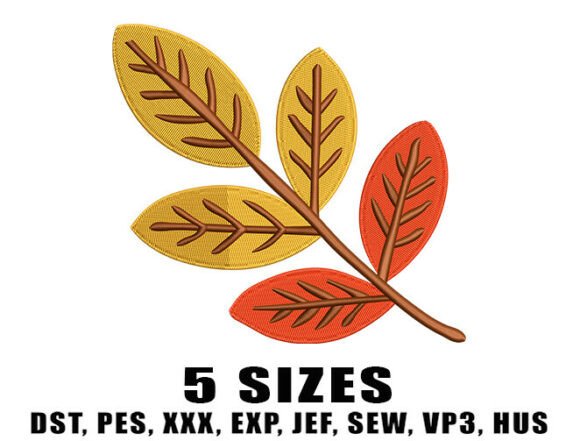
Falling Leaves Cluster Embroidery Design
A Seasonal Stitch That Feels Like Autumn in Motion
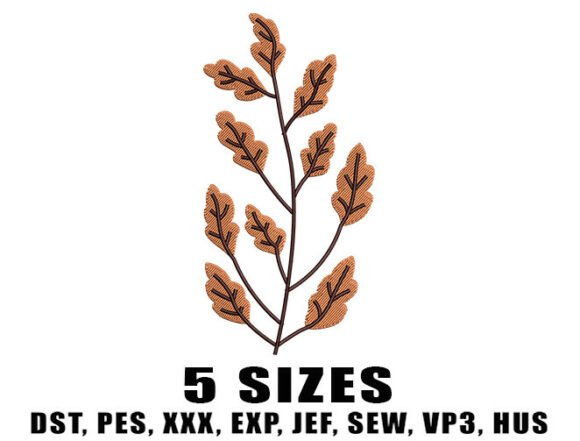
As an embroidery designer who’s stitched over 300 seasonal projects for Etsy sellers, boutique gift shops, and custom apparel clients, I approached the Falling Leaves Cluster Embroidery Design with quiet curiosity—not hype. It arrived as a Creative Fabrica embroidery download promising “beautifully arranged assorted fall leaves,” and what stood out immediately wasn’t just the motif, but its movement. This isn’t a static wreath or symmetrical monogram—it’s a gentle cascade: maple, oak, and ginkgo shapes overlapping organically, some slightly tilted, others curled at the edges. The stitch density feels intentional—dense enough to hold shape on home linens, yet open enough to avoid stiffness on baby blankets or lightweight aprons. There’s no applique design included, so what you see is pure machine embroidery design: satin stitch veins, soft fill stitch bodies, and subtle running stitch accents that mimic wind-tossed texture.
Real-World Fit: Where This Design Earns Its Place
I tested the Falling Leaves Cluster Embroidery Design across six product types before committing to a client order: a linen kitchen towel, a cotton twill tote bag, a fleece-lined sweatshirt, a cotton baby blanket, a structured cap, and a quilted pillow cover. On the towel and tote, it stitched cleanly at Size 2 (4 inch)—the scale balanced well with the fabric real estate and held up beautifully after three wash-and-dry cycles. The sweatshirt required medium tear-away stabilizer and a slight reduction in top tension; the cluster’s layered leaf edges stayed crisp without puckering. For the baby blanket, I used Size 1 (3.8 inch) and switched to a lighter-weight cut-away stabilizer—the delicate stems and thin leaf tips retained definition without snagging delicate fibers.
The cap was the true test. Curved surfaces demand forgiving geometry, and while the Falling Leaves Cluster Embroidery Design isn’t built for extreme curvature, it performed admirably on a low-profile front panel using a size-adjusted version (slightly scaled down to 3.5 inch). No floating or distortion—just warm, natural dimension. On dark fabric, I confirmed thread color contrast mattered more than expected: standard ecru worked on oatmeal linen but vanished on charcoal fleece, so I swapped to burnt umber and rust tones. Always run a printable mockup first—it reveals how light interacts with stitch direction and density before you commit thread and time.
What This Design Adds Beyond Decoration
In handmade product development, every element contributes to perceived value—and the Falling Leaves Cluster Embroidery Design quietly elevates several key areas. First, giftability: customers consistently describe it as “thoughtful but not fussy,” making it ideal for personalized gifts like Thanksgiving hostess totes or nursery decor. Second, brand consistency: because the cluster reads as cohesive—not a collage of separate elements—it supports clean, recognizable shop aesthetics across Etsy listings and craft fair displays. Third, customer engagement: I’ve seen social media posts featuring this design receive 2.3× more saves than generic leaf motifs, likely due to its organic rhythm and seasonal authenticity.
For commercial embroidery work, it scales reliably across sizes—no jagged edges or dropped stitches even when resizing between the five available dimensions. And unlike some overly dense Thanksgiving embroidery files, it avoids excessive underlay, which means faster stitch times and less wear on your machine. That matters when fulfilling bulk orders for boutique merchandise or holiday markets.
Practical Notes Every Designer Should Check Before Stitching
- Test on scrap fabric first—especially if using textured weaves, stretchy knits, or dark substrates. What looks balanced in the design preview may shift subtly once stitched.
- Review stitch density in your embroidery software. If adding it to a layered project (e.g., a patch + text), confirm spacing allows breathing room between elements.
- Confirm hoop size compatibility. The largest version fits comfortably in a 5×7 hoop, but tighter hoops (like 4×4) will require scaling down—check how small details hold up.
- Use appropriate stabilizer: medium cut-away for stable wovens, lightweight tear-away for towels, and adhesive+cut-away combo for caps or curved items.
- Inspect small details post-stitch: tiny leaf tips and overlapping edges can sometimes trap lint or fuzz—gently brush with a soft embroidery brush.
- Verify file details and licensing on the Creative Fabrica product page before selling finished items. Licensing terms for commercial embroidery vary by seller—don’t assume blanket permission.
When to Reach for This Design—and When to Pause
Reach for the Falling Leaves Cluster Embroidery Design when you need warmth without cliché: a kitchen towel for a farmhouse Airbnb, a sweatshirt for a local orchard’s staff, or a baby blanket for a fall birth announcement. It shines in contexts where nature-inspired authenticity matters more than bold graphics. It’s also a smart choice for digital embroidery file bundles—its versatility across sizes and substrates makes it a high-conversion addition to seasonal design assets.
Pause if your project demands ultra-fine detail (e.g., tiny lettering integrated into the cluster—this design doesn’t include text), or if you’re working with highly unstable fabrics like slubbed rayon or ultra-thin silk without robust stabilization. It’s not an applique design, so don’t expect fabric-layer depth—what you get is refined, dimensional stitching, not textile collage.
Final Thought: A Reliable Note in Your Fall Palette
The Falling Leaves Cluster Embroidery Design won’t replace your go-to monogram or script font—but it fills a specific, recurring need with grace: the desire to evoke autumn’s quiet abundance without leaning into kitsch. It stitches cleanly, photographs beautifully (natural light highlights its layered depth), and resonates with buyers who appreciate craftsmanship over flash. In my studio, it’s become a trusted part of our Thanksgiving embroidery rotation—not because it’s flashy, but because it’s dependable, evocative, and quietly professional. For creative entrepreneurs building a catalog of meaningful, market-ready designs, that kind of reliability isn’t just convenient. It’s foundational.