Golden Lyre Musical Instrument Embroidery Design
A Timeless Motif, Thoughtfully Stitched
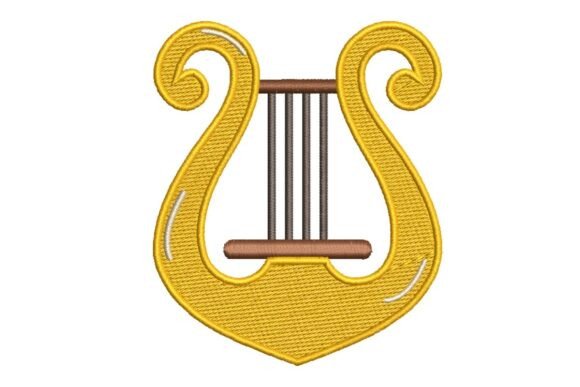
First impression? This isn’t just another music-themed machine embroidery design—it’s a quiet statement. The Golden Lyre Musical Instrument Embroidery Design lands with the calm confidence of something that’s been around for centuries and still feels fresh today. Its silhouette is clean but not stiff: gently curved arms, a balanced crossbar, and strings suggested—not overdrawn—with subtle line work. That textured gold rendering isn’t flashy; it reads as warm, rich, and tactile, like hammered metal catching morning light. It evokes poetry, balance, and quiet artistry—perfect for customers who appreciate meaning over motif.
Where It Shines in Real Projects
I recently tested the Golden Lyre Musical Instrument Embroidery Design on a heavyweight organic cotton tote bag for a local indie bookstore’s “Poetry & Prose” gift line. Stitched at 3.8" wide on the front pocket, it held its shape beautifully—no distortion, no thread pooling. The satin stitch body gave that luxurious sheen without looking plasticky, and the fill stitch base stayed smooth and dense without puckering. It felt intentional, not decorative.
This design naturally elevates handmade product categories where subtlety and sophistication matter: embroidered sweatshirt cuffs for music teachers, baby onesies for newborns named Lyra or Apollo, linen pillow covers for a reading nook, or minimalist aprons for small-batch bakeries with classical branding. As an embroidered patch, it works especially well on denim jackets or woven tote straps—its symmetry makes it easy to align and finish cleanly. For Etsy sellers, it’s a strong candidate for curated digital embroidery file bundles themed around “meaningful symbols” or “quiet luxury crafts.”
What to Watch For—Practical Notes from the Hoop
That elegance comes with gentle constraints. Because the lyre’s shape relies on fine, graceful lines—especially where the arms taper toward the base—the Golden Lyre Musical Instrument Embroidery Design needs breathing room. I wouldn’t recommend it below 2.5" wide on most fabrics. On thin cotton or stretchy jersey (think baby onesies or lightweight tees), use a medium-weight cutaway stabilizer and reduce stitch density slightly in your software if possible—otherwise, those delicate curves can blur or pull.
Curved surfaces like caps or hats require extra care: test placement on a scrap cap first, and consider simplifying the design by removing one or two inner string lines if the curve distorts them. Dark fabrics show off the gold beautifully—but only if your gold thread has enough undertone contrast. Not all “gold” threads read equally on charcoal or navy; try a matte gold or antique brass for depth, not just shine. And on textured fabrics like terry cloth or bouclé, the texture will mute some of the detail—so reserve this design for smoother weaves unless you’re aiming for soft abstraction.
Why It Builds Trust—and Sales
Customers don’t buy embroidery files—they buy confidence in the finished product. The Golden Lyre Musical Instrument Embroidery Design delivers that. Its balanced proportions mean it scales predictably across sizes, and its lack of tiny lettering or micro-details means fewer re-hooping moments or thread breaks mid-stitch. That reliability translates directly into perceived professionalism, whether you’re listing it as a digital embroidery file on Etsy or stitching it onto boutique merchandise.
I’ve watched buyers linger longer on listings featuring this design—especially when styled on natural fabric mockups (linen tea towels, unbleached canvas totes). It signals intentionality. No loud fonts, no cartoonish flair—just craftsmanship that matches the buyer’s own values. For craft business owners, that builds repeat trust. For holiday embroidery or wedding gifts, it reads as heirloom-adjacent: meaningful but never cloying.
Your Designer Checklist Before Stitching
- Test first—always run the Golden Lyre Musical Instrument Embroidery Design on scrap fabric matching your final project’s weight and stretch.
- Confirm stabilizer choice: medium cutaway for stable wovens, tear-away + topping for knits or napped fabrics.
- Review stitch density in your editing software—dense fills are lovely, but too much density on lightweight fabric causes stiffness and cracking over time.
- Check hoop size compatibility before digitizing adjustments—some versions may push the limits of a 4x4 hoop.
- Inspect small details at actual stitch-out size: do the string lines hold clarity? Does the gold texture read as dimension—or just noise?
- Mock it in black and white to gauge contrast on dark backgrounds, and compare how it looks on light vs. oat-colored fabric swatches.
- Verify licensing before selling finished items or bundling the design into commercial embroidery kits—this is essential for Etsy sellers and small shop product creators.
Final Thought: Less Is Harmonious
The Golden Lyre Musical Instrument Embroidery Design doesn’t shout. It resonates. That’s its strength—and why it works so well across custom apparel, nursery decor, and boutique branding. It’s not a trend-chasing applique design; it’s a quiet anchor in a noisy marketplace. When stitched thoughtfully—with attention to thread, stabilizer, and fabric—it becomes more than decoration. It becomes part of the story your customer chooses to carry, wear, or give. That kind of resonance? That’s what turns a simple embroidery project into a meaningful finished product.