Haunted House Embroidery
First Impressions: Whimsy, Spook & Instant Charm
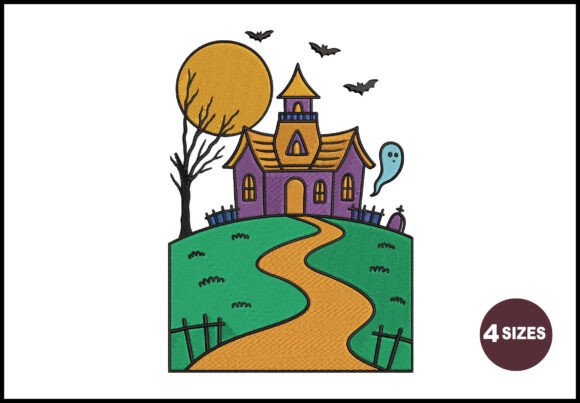
As an embroidery designer who’s tested hundreds of digital embroidery files for personalized gift shops and Etsy sellers, I opened Haunted House Embroidery expecting playful Halloween energy—and was delighted by how much warmth it delivers. This isn’t just a spooky silhouette; it’s a whimsical haunted house with bats mid-flutter, friendly ghosts peeking from windows, and a winding path that invites storytelling. The mood strikes that rare balance: delightfully eerie but never scary—ideal for families, nurseries, or lighthearted wedding keepsakes. It feels handmade, not mass-produced; charmingly detailed without being overly dense. For customers seeking personality over polish, this design reads as sweet, seasonal, and sincerely joyful—not cartoonish or generic.
Where Haunted House Embroidery Shines in Personalized Gifting
This machine embroidery design thrives where emotional resonance meets practicality. On a baby embroidery project—say, a soft organic cotton blanket or a muslin swaddle—it transforms into a gentle, storybook-style heirloom. Parents love subtle Halloween motifs that grow with the child, and this design’s rounded shapes and open spacing avoid looking too “theme park.” As a wedding gift, imagine it stitched onto a linen pillow cover for the couple’s “haunted honeymoon cottage” getaway—or on a custom apron for a baker who adores gothic romance. It’s equally at home on embroidered towels for a quirky kitchen boutique, tote bags for craft fairs, or pillow covers for a vintage-inspired nursery.
For Etsy sellers and small shop owners, Haunted House Embroidery is a versatile anchor design. Pair it with neutral thread palettes (ivory, charcoal, deep plum) to broaden appeal beyond October. Use it in printable mockups to show customers exactly how it’ll look on their chosen item—whether it’s a tea towel, denim jacket, or baby onesie. That visual clarity builds customer trust fast. And because it’s inherently narrative, it sparks engagement: buyers tag friends, share stitching progress, and return for matching sets (think: ghost-themed napkins + haunted house oven mitts).
Smart Placement: Where to Stitch (and Where to Pause)
While Haunted House Embroidery is highly adaptable, thoughtful placement ensures your finished product looks polished and lasts. Avoid placing it on heavily textured fabric like thick terry cloth towels unless you reinforce with cutaway stabilizer—the fine bat wings and path details may blur. Similarly, skip stretchy baby clothes (like ribbed knit bodysuits) unless you use high-quality tear-away + topping; the design’s open elements can distort on unstable surfaces.
Curved surfaces—think baseball caps or curved tote bag pockets—require careful hooping and possibly digitizing tweaks. And while the ghosts and house outline hold up beautifully on dark fabric, test your thread colors thoroughly: light gray or off-white threads often read better than stark white on navy or charcoal. Small lettering isn’t part of this file (per the description), so no concerns there—but do inspect stitch density in the path and window areas before scaling down. If you’re planning mini versions for keychains or ornaments, confirm the smallest recommended size in your software preview.
What Makes It Gift-Ready?
Giftability isn’t just about cuteness—it’s about perceived value and emotional connection. Haunted House Embroidery delivers both. Its whimsy signals care and creativity, elevating a simple towel or pillow into a handmade product with intention. Customers don’t just buy a design; they buy nostalgia, inside jokes, shared aesthetics. That translates directly to higher average order values and repeat buyers. In product photography, its balanced composition and clear focal points make for strong thumbnails and Instagram carousels—critical for digital embroidery file sellers offering mockup bundles or for shops showcasing custom order previews.
Essential Embroidery Notes Before You Stitch
Before adding Haunted House Embroidery to your next batch of custom orders, run these checks:
- Test on scrap fabric first—especially if using a new stabilizer combo or unusual base material.
- Confirm hoop size compatibility. While not specified in the listing, most whimsical house designs of this scale fit comfortably in a 5x7" hoop. Verify before digitizing adjustments.
- Review stitch density in your embroidery software. Look for tight clusters around the roofline or ghost outlines—these benefit from reduced density or slight resizing for breathability on delicate fabrics.
- Use proper stabilizer: medium-weight cutaway for stable wovens (linen, quilting cotton), tear-away + topping for knits or dark fabrics.
- Compare light and dark fabric mockups. A single thread palette rarely works universally—swatch at least two options (e.g., charcoal + cream vs. black + gold).
- Check small details after stitching: ensure bat wings and path edges are crisp—not frayed or lost in fabric pile.
- Confirm commercial licensing before selling finished products. Since this is marketed for “fun Halloween stitching projects,” verify whether the license permits resale of physical items—many designers require a small business or extended license for that.
Final Thought: More Than a Halloween Design
Haunted House Embroidery is one of those rare files that transcends its season. Yes, it’s perfect for pumpkin spice season—but its charm lies in its timelessness. It’s the kind of personalized gift that gets framed, passed down, or pulled out every October with a smile. For baby product creators, it adds quiet magic to early milestones. For wedding gift designers, it whispers “forever” with a wink. And for small business owners, it’s a reliable, emotionally intelligent asset—one that stitches cleanly, sells thoughtfully, and connects deeply. Just remember: let the whimsy guide you, but let testing ground you. Your customers—and your embroidery machine—will thank you.